Performance & Biological Restoration Insights
Understanding the Science of Biological Healing
PRP for Knee Osteoarthritis: Evidence & Outcomes
PRP for Knee Osteoarthritis: Clinical Evidence and Patient Outcomes
If knee pain is limiting your walking, workouts, or everyday life, you may be looking for a non-surgical knee pain treatment that does more than mask symptoms. At Crown Regenerative Medicine in Campbell, CA, we use platelet-rich plasma (PRP) and other advanced biologic options to help carefully selected patients manage knee osteoarthritis and stay active longer—without rushing into surgery.
What Is PRP and How Is It Prepared with the Precision PRP (Emcyte®) System?
Platelet-rich plasma is a concentrated portion of your own blood that contains a higher-than-normal level of platelets and growth factors, which are involved in your body’s natural healing response. When precisely prepared and injected into the knee joint, PRP aims to calm inflammation and support the tissues that are stressed by osteoarthritis.
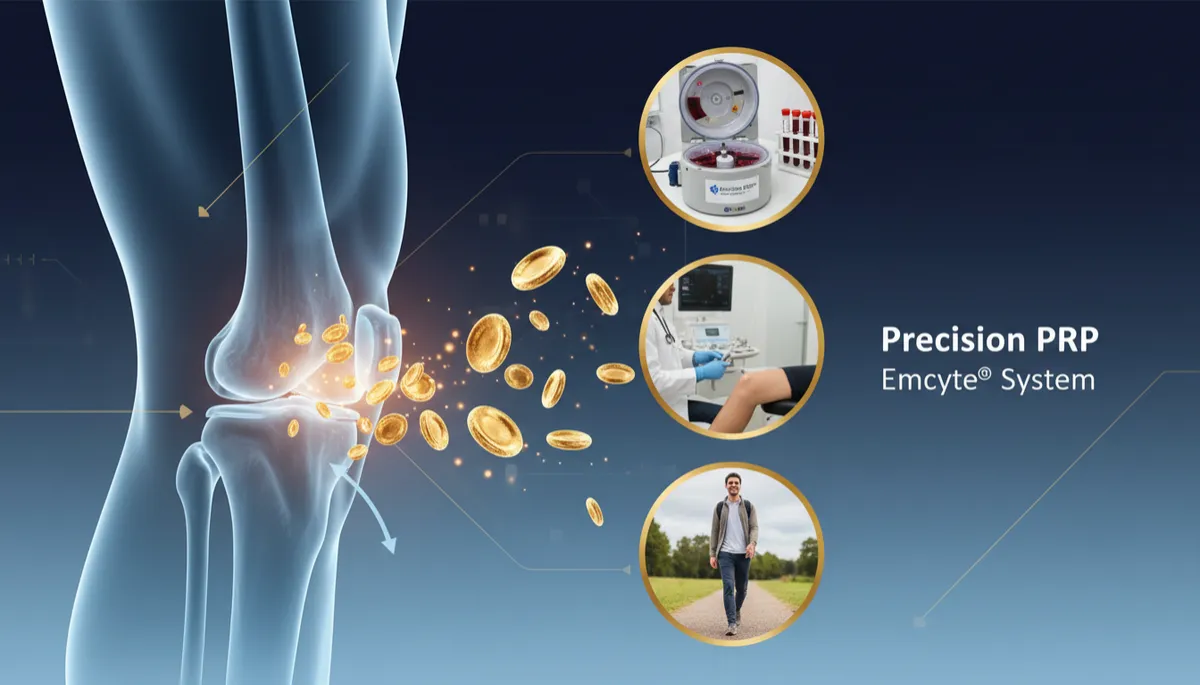
At Crown Regenerative Medicine, we use the Precision PRP (Emcyte® System), a medical-grade platform designed to create a high-quality, leukocyte-controlled PRP product, starting with a small blood draw that is processed in a specialized centrifuge to isolate the platelet-rich layer for joint injection.
- A small amount of blood is drawn from your arm and processed in the Emcyte® Precision PRP system to concentrate platelets for injection.
How PRP Targets Knee Osteoarthritis
Knee osteoarthritis (OA) is more than “wear and tear.” It involves low-grade inflammation, cartilage breakdown, and changes in the bone and joint lining. PRP does not “re-grow” an entirely new joint, but it may help in several ways:
- Modulating inflammation: Platelets release signaling proteins that can shift the joint environment away from chronic inflammation, which is linked to pain and stiffness.
- Improving joint function: By reducing pain and stiffness in some patients, PRP can make it easier to walk, climb stairs, and participate in physical therapy or strength training.
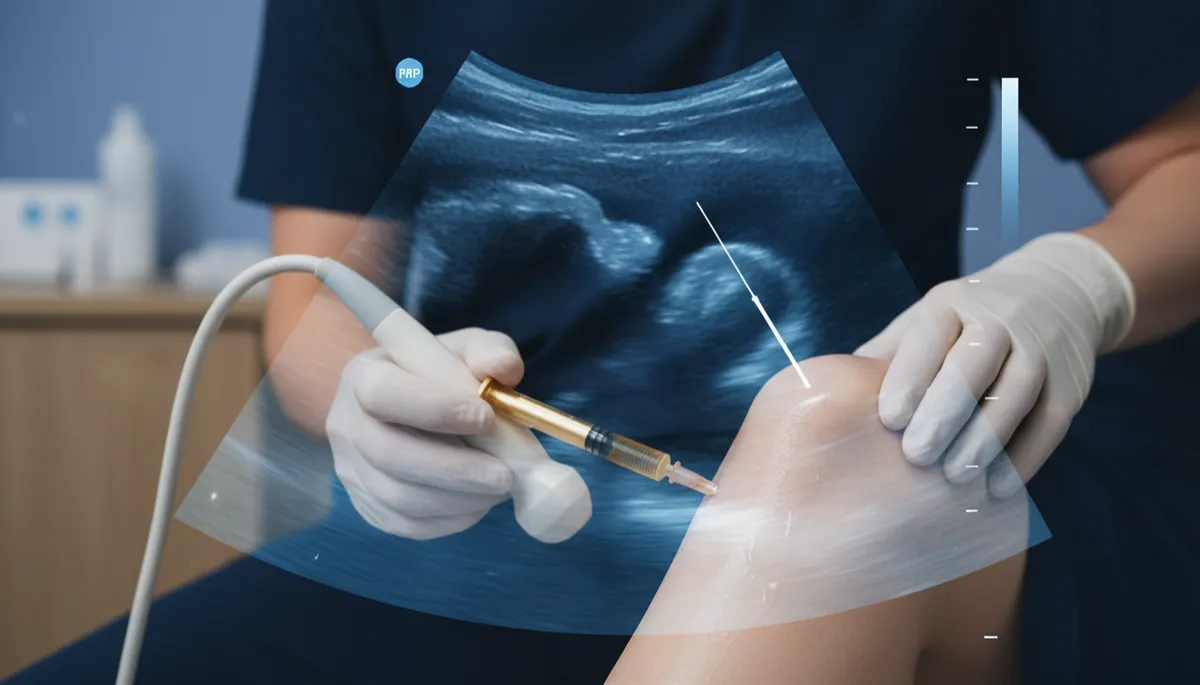
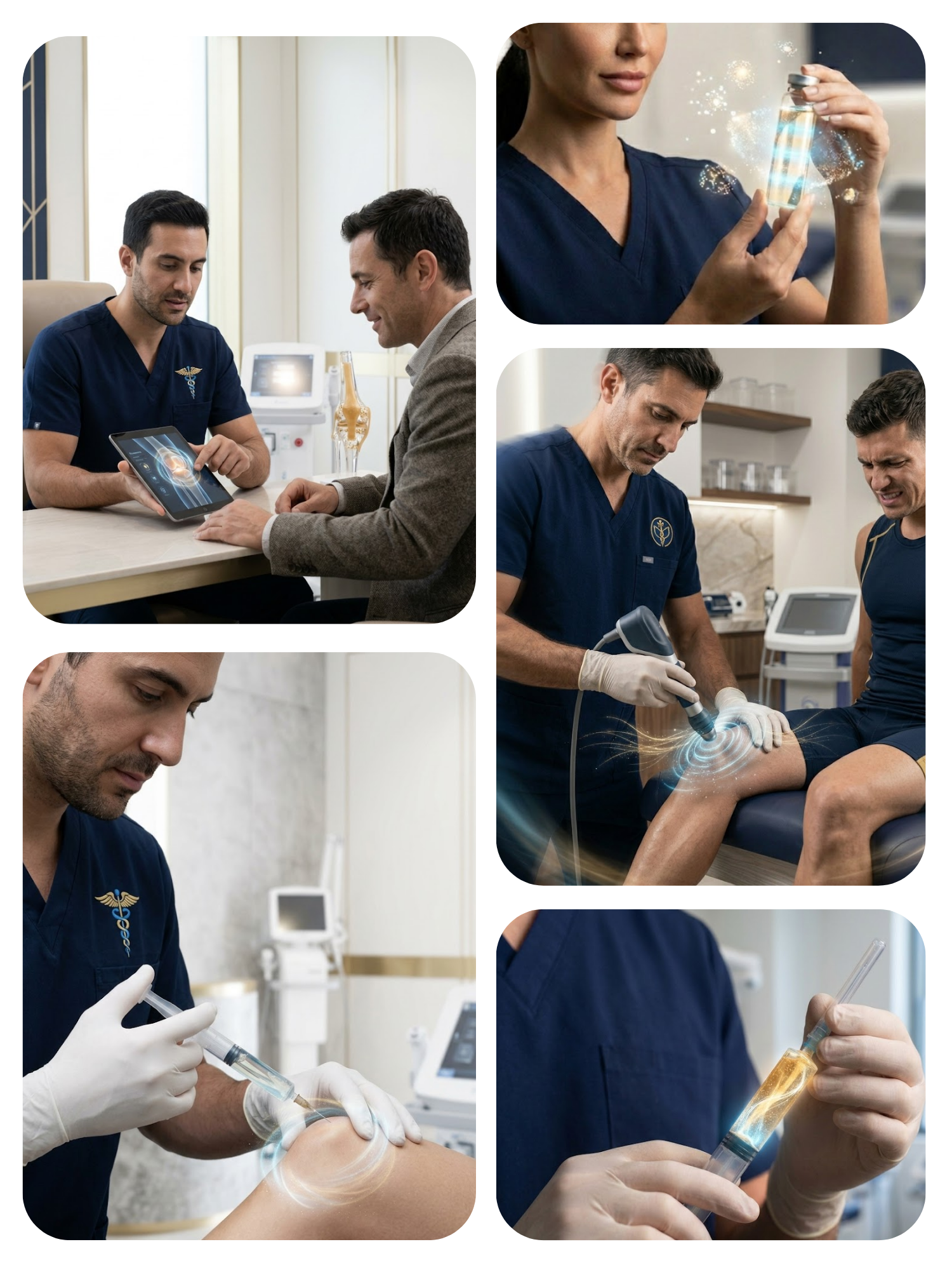
Image-guided PRP injections help target the structures most affected by knee osteoarthritis.
What Does the Clinical Evidence Show?
Symptom Relief, Structure, and Limitations
Recent systematic reviews and randomized trials suggest that PRP for knee osteoarthritis can provide modest but meaningful improvements in pain and function for many patients, especially those with mild-to-moderate disease, often outperforming hyaluronic acid (“gel injections”) over 6–12 months in appropriate candidates. Real-world experience and some longer-term studies show that benefits may last many months to several years but tend to diminish over time and are not permanent, and some patients do not notice significant change. Imaging studies do not consistently show that PRP rebuilds cartilage or stops arthritis progression, so it is best viewed as a symptom-modifying therapy rather than a proven disease-modifying treatment, and professional guidelines consider the data promising but still evolving.
Who Is a Good Candidate for Platelet-Rich Plasma Knee Treatment?
At our regenerative medicine Campbell CA clinic, we typically consider PRP for knee osteoarthritis in patients who:
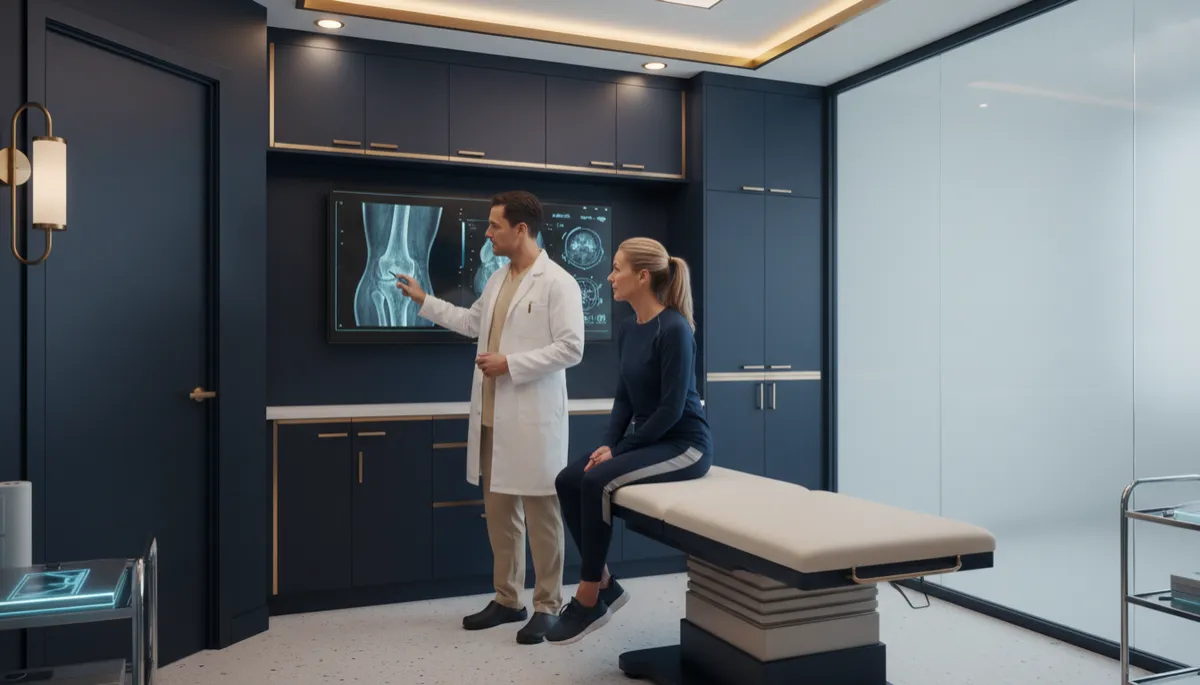
- Have mild-to-moderate knee OA on X-ray or MRI, or early advanced disease with persistent symptoms despite basic care.
- Have tried activity modification, physical therapy, oral medications, or basic injections without enough relief.
- Want to explore non-surgical knee pain treatment to delay or potentially avoid knee replacement when appropriate.
- Are medically able to undergo a blood draw and joint injection and do not have uncontrolled bleeding disorders or active infection.
PRP, Advanced Biologics, BMAC, Viscosupplementation, and Performance Recovery: How It All Fits Together
PRP is one tool in a broader regenerative and orthopedic toolkit at Crown Regenerative Medicine, serving patients from Campbell, San Jose, Los Gatos, Saratoga, Los Altos, and Cupertino. Depending on your age, activity level, imaging, and goals, we may discuss:
- Advanced Biologics: These therapies use your body’s own cells and signaling molecules to support tissue healing, with PRP alongside other bone marrow–derived or specialized concentrates when appropriate.
- BMAC (Bone Marrow Concentrate): For some patients with more advanced damage or complex injuries, BMAC may be considered as a more intensive option that concentrates cells from your bone marrow, though it is not necessary or suitable for everyone.
- Viscosupplementation: Gel-like hyaluronic acid injections can help certain people by improving joint lubrication and may be used alone or strategically combined with PRP in select cases.
- Performance Recovery: For active adults and athletes, we pair biologic injections with targeted rehab, strength training, and movement coaching to protect the joint and support long-term performance.

What to Expect: Treatment Day and Recovery
On the Day of Your PRP Injection
A platelet-rich plasma knee procedure is typically an outpatient visit lasting about 60–90 minutes:
- We review your plan, answer questions, confirm medications and recent activity, draw your blood, and process it using the Precision PRP (Emcyte®) System.
- The skin around your knee is cleaned, local anesthetic is used, and PRP is injected into the joint and, when appropriate, surrounding structures under ultrasound or careful anatomical guidance.
Recovery and Timeline
Most patients walk out of the office the same day, with mild soreness or a feeling of fullness in the knee for several days. We usually recommend relative rest, avoiding high-impact activity and anti-inflammatory medications unless cleared, then gradually resuming low-impact exercise and physical therapy as guided by your provider.
- Improvements often appear gradually over 4–12 weeks, sometimes as part of a series of injections spaced several weeks apart.
FAQ: PRP for Knee Osteoarthritis at Crown Regenerative Medicine
How long do results typically last?
Studies show that many patients experience benefits for 6–12 months, and some for several years, especially with milder arthritis. Responses vary widely, PRP is not a permanent cure, and some patients may not experience meaningful improvement.
Is PRP covered by insurance?
Many insurers still consider PRP an emerging therapy and do not cover it for knee osteoarthritis. Our team will review costs with you in advance so you can make an informed decision.
Am I guaranteed to avoid surgery?
No treatment can guarantee that you will never need knee replacement. Our goal with PRP and other biologics is to reduce pain, improve function, and, in some cases, delay the need for surgery, with a thorough consultation to set realistic expectations.
Ready to Explore Non-Surgical Knee Pain Treatment in the South Bay?
If you live in Campbell, San Jose, Los Gatos, Saratoga, Los Altos, or Cupertino and are exploring options for knee osteoarthritis treatment San Jose and beyond, our team at Crown Regenerative Medicine is here to help. We combine evidence-informed biologic therapies like PRP, BMAC, and viscosupplementation with thoughtful rehab and lifestyle strategies to create a plan that fits your life and goals. To learn whether PRP for knee osteoarthritis or another biologic option is right for you, schedule a personalized consultation at Crown Regenerative Medicine in Campbell, CA, so we can review your imaging, discuss your activity goals, and design a thoughtful, non-surgical plan to help you move with more confidence.

Preparation is Part of the Performance
Deepen Your Understanding of The Crown Method
While you wait for our call, explore these resources to prepare for your consultation:
For Acute Injuries Needing Immediate Attention
Can’t Wait to Get Started?
If you are experiencing an acute injury and require a priority evaluation today, please call or text our Campbell flagship directly:
Request A Consult
Treatments
Precision PRP (Emcyte® System)
Advanced Biologic
BMAC (Bone Marrow Concentrate)
Performance Recovery
Viscosupplementation
What We Treat
Knee Pain & Osteoarthritis
Shoulder & Rotator Cuff
Hip & Joint Degeneration
Sports & Tendon Injuries
Back & Spine Longevity
Locations
San Jose
Campbell
Los Gatos
Saratoga
Los Altos
Cupertino
Copyright 2026. Crown Regenerative Medicine. All Rights Reserved.